
For more Suphra editorial, browse the blog index, read our scan-first food waste guide, try the 3 + 3 recipe roulette workflow, and compare weekly and yearly pricing if you cook from inventory most nights.
You didn't mean to waste that bunch of kale. Or the half-block of tofu. Or the three limes that went moldy before you remembered why you bought them. Neither did most people — and that's exactly the problem that decades of food waste research keeps confirming.
Household food waste isn't caused by laziness or carelessness. It's caused by a predictable set of structural frictions: buying without knowing what you have, planning meals instead of planning ingredients, and facing the "random fridge" problem with no good tool to solve it. Suphra was designed to address all three.
What the research actually says about why we waste food
The science on household food waste has been remarkably consistent over the past two decades. The causes aren't exotic — they're structural, and they repeat across countries, income levels, and household sizes.
The USDA estimates that between 30 and 40 percent of the US food supply goes to waste — the equivalent of approximately 133 billion pounds and $161 billion worth of food per year. The majority of this waste occurs at the consumer level, inside homes.
usda.gov — Food Waste FAQsCause 1: We shop from memory, not inventory
The most consistent finding in household food waste research is that people buy food without knowing what they already have. According to WRAP (the UK's leading food waste charity), the most commonly wasted foods are fresh vegetables, fruit, and bread — not because people don't like them, but because they're bought with an intention that doesn't survive contact with the week.
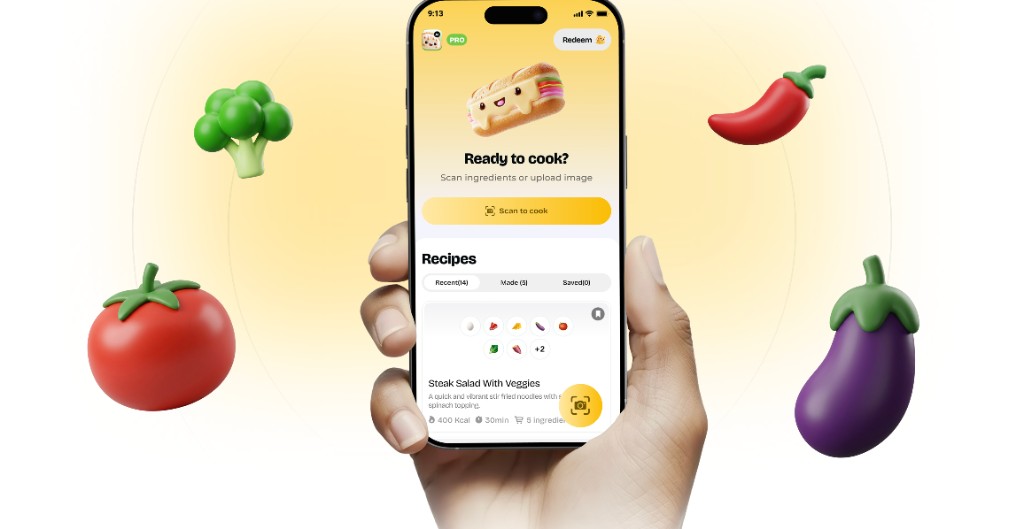
The fix isn't more discipline. It's a live inventory. Suphra's ingredient scanner builds this automatically — scan, photograph, or describe what you have, and the app maintains a running picture of your pantry so you shop from reality, not memory.
Cause 2: Meal planning doesn't match how people actually cook
Traditional meal planning apps operate on a flawed assumption: that you know what you want to cook a week in advance and will follow through consistently. Research published in Resources, Conservation and Recycling found that even households that planned meals still wasted significant amounts of food — because plans don't account for changes in schedule, appetite, or energy levels. What people need isn't a better plan. It's a better response to reality as it unfolds.
That's the model Suphra's AI recipe engine is built on: start from what's actually in your fridge today, and build the meal from there. Not from a recipe that assumed a fully stocked pantry.
The FAO estimates that if food waste were a country, it would be the third-largest emitter of greenhouse gases on the planet — behind only the United States and China. Reducing household food waste is one of the highest-leverage individual actions for climate impact.
fao.org — Food Loss and Food WasteCause 3: The "random fridge" problem has no good solution — until now
Ask anyone why they ordered takeout on a night when the fridge was full. The answer is almost always the same: "I didn't know what to make with what we had." This is what behavioral economists call a decision paralysis problem — not a shortage of ingredients, but a shortage of direction.
The EPA's Food Recovery Hierarchy identifies source reduction — using what you have before it expires — as the single most impactful tier of food waste prevention. Suphra's recipe roulette is the practical implementation of that principle: scan your ingredients, get three cookable recipes in seconds, pick one, and cook it step by step.
How proper food storage extends ingredient life (and reduces waste)
A significant portion of home food waste is caused not by forgetting ingredients, but by storing them incorrectly. The NHS food safety guidance highlights that most fresh produce lasts significantly longer when stored at the right temperature and in the right containers. Herbs stored in water like flowers last twice as long. Whole vegetables last longer uncut. Cheese wrapped in wax paper outlasts plastic wrap by days.
Knowing what you have is only half the solution. Knowing when it expires — and what to cook before it does — is the other half. Suphra surfaces expiring ingredients and prioritizes recipes that use them, so the "cook this first" decision is made for you.
What AI gets right (and wrong) about food waste
AI has entered the food space fast — and not always responsibly. In 2023, Instacart was reported to be generating recipes with ingredients that don't exist — invented measurements, impossible combinations, and food that no one could cook in a real kitchen. This is what happens when AI starts from a library of recipes and works forward, inventing freely.
Suphra's approach is the opposite: start from a photo or scan of your actual ingredients, and reason backward to what's genuinely cookable from them. It's the difference between AI that knows about food and AI that knows what's in your kitchen.
Project Drawdown — the leading resource on climate solutions ranked by impact — places reducing food waste among the top solutions for addressing climate change globally, estimating that it could prevent 88.5 gigatons of CO₂-equivalent emissions by 2050 if adopted at scale.
drawdown.org — Reduced Food WasteFive things you can do this week to cut food waste in half
1. Scan before you shop. Spend 60 seconds scanning your fridge with Suphra before any grocery run. You'll stop buying duplicates of what you already have.
2. Cook from expiry, not craving. On weeknights, filter your cooking by what's closest to its expiry date — not what you feel like eating. Suphra surfaces expiring ingredients automatically and generates recipes around them.
3. Store herbs like flowers. Place fresh herbs stem-down in a glass of water, cover loosely with a bag, and refrigerate. Serious Eats' herb storage guide shows this can extend the life of cilantro, parsley, and basil by up to two weeks.
4. Embrace the leftover rebuild. Don't reheat leftovers as-is — rebuild them into something new. Last night's roast vegetables become fritters. Leftover rice becomes crispy rice toppers. Scan your leftovers into Suphra for instant transformation ideas.
5. Use your freezer as a pause button. According to FoodSafety.gov's FoodKeeper guide, most cooked proteins, grains, and soups can be frozen for 3–6 months with no quality loss. Freeze before it expires, thaw when you need it.
Ready to stop wasting food?
Scan your ingredients in under 10 seconds. Get three AI-generated recipes built from what's actually in your kitchen — grounded in real food, not invented by an algorithm.
Frequently asked questions
- USDA — Food Waste FAQs
- UN FAO — Food Loss and Food Waste
- EPA — Food Recovery Hierarchy
- WRAP — Household Food Waste
- Project Drawdown — Reduced Food Waste
- NHS — How to Store Food Safely
- Resources, Conservation and Recycling — Household Food Waste Research
- FoodSafety.gov — FoodKeeper Guide
- Serious Eats — How to Store Fresh Herbs
- 404 Media — Instacart AI Recipe Report